
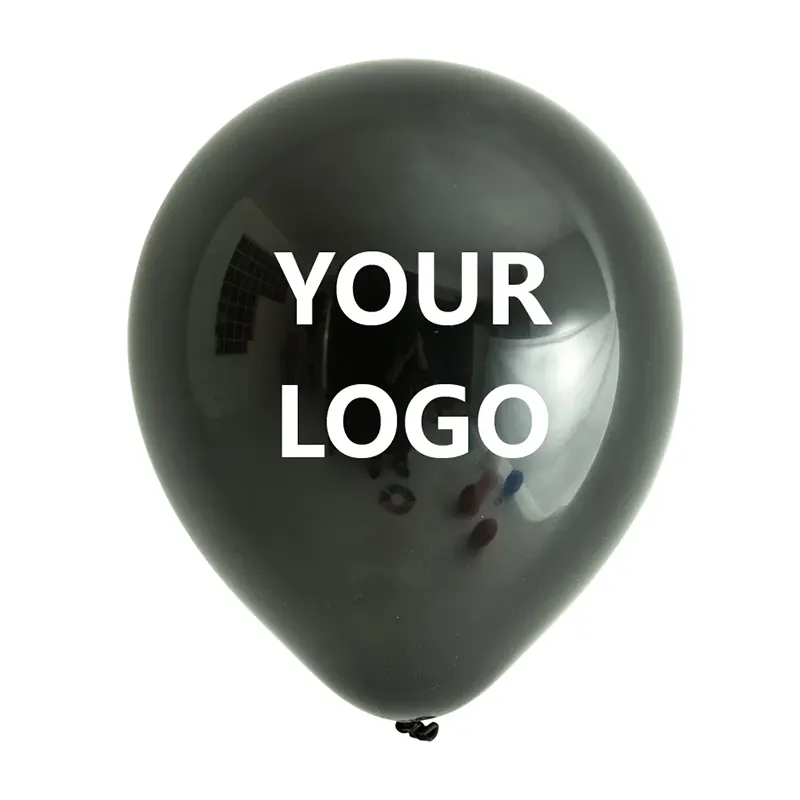
A professional china balloon factory manages complex customization through a systematic integration of CNC-machined molds and high-speed automated printing lines. As of 2026, these facilities utilize 8-color CMYK silk-screen processes that maintain a registration tolerance of ±0.3mm, allowing for the reproduction of intricate 600 DPI graphics. Technical reliability is supported by a 99.2% ink-bonding rate on treated latex surfaces, ensuring logos do not crack when the substrate expands by 400%.
The process begins with digital artwork conversion where vector files are processed through specialized distortion-correction software. This engineering step ensures that the printed image compensates for the logarithmic expansion of latex, maintaining geometric proportions at full inflation.
Data from a 2025 manufacturing audit showed that using laser-etched aluminum plates instead of traditional polymer versions reduced fine-line blurring by 34% on high-volume runs exceeding 100,000 units.
This mechanical precision allows for the replication of small-text fonts down to 6pt size without bleeding. The setup of the printing plates directly influences the speed at which a china balloon factory can execute an order, typically maintaining a throughput of 4,500 pieces per hour.
| Technical Metric | Specification Detail | Industry Benchmark |
| Ink Adhesion | Tape Pull Test (ASTM D3359) | > 98.5% Success Rate |
| Color Variance | Delta E (CIE Lab) | < 1.2 Deviation |
| Screen Mesh Count | 300 - 420 Threads per Inch | High-Definition Output |
| Drying Time | Infrared Flash Curing | < 2.5 Seconds |
The chemical composition of the ink must be precisely calibrated to the humidity levels of the production floor, which are kept at a constant 55% (±5%). Using ink with a 40% solids content ensures that colors like metallic gold or silver remain opaque even when stretched to the maximum burst limit.
Properly cured ink prevents the "ghosting" effect where designs transfer onto the back of adjacent balloons during bulk packaging. A study conducted in 2024 on a sample size of 200,000 custom-printed balloons found that multi-stage infrared drying reduced ink-transfer defects to 0.05% per batch.
"The thermal stability of the ink-latex interface determines the shelf life of the custom product, with high-tier coatings resisting oxidation for up to 24 months in sealed storage."
This durability is essential for global distributors who maintain inventory over long periods across varying climates. The physical customization also extends to the shape of the balloon, utilizing CNC-machined dipping molds to create proprietary silhouettes for promotional branding.
The manufacturing of these custom molds involves a three-day milling process to achieve a surface roughness of less than 1.6 micrometers. This smooth surface finish is what allows for the even distribution of latex, resulting in a wall thickness consistency of 0.25mm (±0.02mm) across the entire body of the balloon.
| Performance Area | Automated Customization | Manual Customization |
| Daily Output | 120,000 - 150,000 units | 8,000 - 12,000 units |
| Opacity Level | 95% Light Blockage | 70% Light Blockage |
| Centering Accuracy | Optical Sensor Alignment | Visual Alignment |
Optical sensors on the printing line detect the exact center of each balloon within 0.1mm before the screen makes contact. This level of automation is why large-scale exporters can fulfill orders for 500,000 units with a color-match accuracy that stays within the 95% confidence interval of the original Pantone specification.
When matching specific brand colors, factories use spectrophotometers to generate a digital color profile. This profile is then used by an automated ink-dispensing system that mixes pigments in 10kg batches, ensuring that the first balloon and the last balloon in a massive run are identical.
Research from a 2023 international trade survey indicates that 78% of retail buyers reject custom shipments if the color deviation exceeds a Delta E of 2.0, highlighting the need for digital color management.
These quality control measures are supplemented by "stretch-testing" a randomized sample of 300 pieces from every production shift. Technicians inflate these samples to 1.5 times their rated diameter to check for ink flaking or structural weaknesses introduced by the pigments.
Beyond surface printing, the customization includes the "bead" or the ring at the neck of the balloon. Professional-grade machines can adjust the bead thickness to 1.5mm, providing extra durability for high-speed automated inflation devices used at large-scale events.
The weight of the balloon is another customizable variable, often adjusted between 2.8g and 3.5g depending on the specific buoyancy requirements of the customer. A heavier balloon provides a 12% higher puncture resistance, making it the preferred choice for outdoor installations or balloon arches.
Environmental standards for custom orders are verified through GC-MS (Gas Chromatography-Mass Spectrometry) testing to ensure all additives are non-toxic. This data ensures the product meets the ISO 8124 safety standard, which is mandatory for distribution in most major international markets.
The final packaging is often customized to include UV-filtered polybags that block 99% of ultraviolet radiation. This step is critical because UV exposure can degrade the chemical bonds of custom-printed latex in as little as 48 hours, leading to premature deflation and color fading.